



There is a moment on Christmas morning, usually around eleven, when the ham goes back in the oven with its glaze on and the whole house starts to smell like Christmas. Everybody drifts into the kitchen. Somebody asks if it is nearly ready. It never is, and it doesn't matter, because that smell is half the reason we bother.
For most families the glaze is brown sugar, honey, mustard, maybe orange and cloves. It is lovely, and it has been lovely for a very long time. But there is a native fruit that does the job better, and it grows in Australian rainforest.
What is Davidson plum?
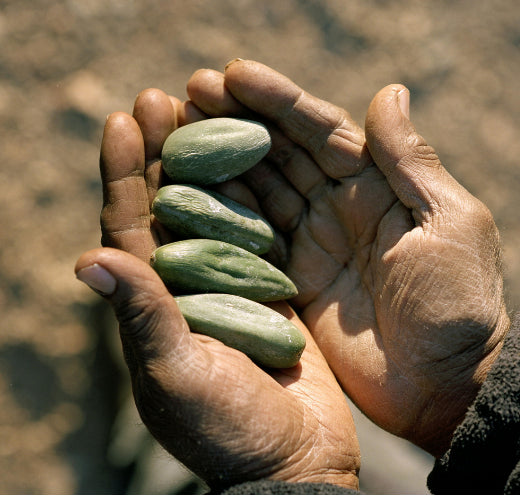
Davidson plum or "ooray" in local language, is the fruit of a small rainforest tree native to Queensland and northern New South Wales. It grows in clusters straight off the trunk and branches, which looks faintly unlikely the first time you see it, and the fruit is deep purple, almost black, with blood-red flesh. I
It is not a plum in the way we usually mean. It is properly sour, much closer to a damson or a cranberry than anything you would eat from the fruit bowl, with a sharp, bright, almost wine-like tartness. Very few people eat one raw twice.
It has been eaten in our home country for a very long time, and it is one of a number of native foods, alongside lemon myrtle and bunya nut, that are now finding their way onto Australian tables well beyond where they grow. We have written more about them in our guide to Australian native ingredients.
You will usually find it as a frozen purée, a jam, or dried and powdered, from native food suppliers and some good delis.

Why it works on a ham
Here is the argument, and it is a simple one.
A Christmas ham is salty and rich. A classic glaze adds sweetness on top of that, then more sweetness, and by the third slice all you can taste is sugar. It is pleasant, but it flattens everything.
A tart fruit does the opposite. It cuts through the fat and the salt the way apple sauce does for pork or cranberry does for turkey, so you can actually taste the ham underneath. Davidson plum is sharp enough to do that properly, and deep enough in colour to bake to a dark, glossy, near-black lacquer that looks like the ham in the magazine rather than the one you usually end up with.
It also means the glaze keeps working the next day. Cold ham with a sweet glaze can be cloying. Cold ham with a sharp fruit glaze is the best sandwich of Boxing Day.
How to glaze a ham so it comes out dark and glossy
Whatever glaze you use, the method matters as much as the recipe. This is how we tell customers to glaze ours, and it works for any cooked leg ham.
-
Thaw it properly. If your ham is frozen, give it two full days in the fridge, never on the bench and never in water.
-
Take it out of the fridge an hour before baking, so it heats evenly.
-
Heat the oven to 160°C (140°C fan forced). Low and steady stops the sugars burning before the ham is hot through.
-
Sit the ham on a rack in a baking dish and pour a cup of water into the base. The water keeps the drips from scorching and keeps the oven moist.
-
Bake it for an hour on its own, before any glaze goes on.
-
Warm the glaze in a small pot while the ham bakes. Warm glaze brushes on evenly, cold glaze drags.
-
Brush it on generously, then return the ham to the oven for about another 45 minutes, basting every 15 minutes. Each layer builds the lacquer.
-
Rest it before carving, and serve the leftover glaze warm on the side.
You can do this the day before. Glaze and bake it, cover it with lightly oiled cling wrap so the glaze doesn't stick, and keep it in the fridge. On the day, let it sit out of the fridge for an hour, then warm it on a rack over a tray of water in a low 120°C oven until heated through. It frees the oven for everything else on Christmas morning.
For choosing a ham, carving it and storing leftovers, our Christmas ham guide has the lot.
Other ways to use Davidson plum
If you find a jar of Davidson plum jam or a bag of frozen purée, it is worth having in the house well beyond Christmas.
On a cheese board. A spoonful of Davidson plum jam next to a sharp cheddar or a washed rind does what quince paste does, with more bite.
With duck or pork. Anywhere you would use a cherry or plum sauce, Davidson plum works, and its sourness suits rich meat even better.
In desserts. Swirled through vanilla ice cream, spooned over a pavlova, or folded into a cheesecake topping. Its colour alone is worth it.
In a dressing. A teaspoon of purée whisked into olive oil and vinegar makes a deep pink dressing for a summer salad.
What to serve with it
A Davidson plum ham wants things that are fresh and cool next to it, because the glaze already brings the depth. A crisp salad with a sharp dressing. Roast potatoes, because Christmas. Something green. A pearl couscous salad with herbs and lemon is a very good match, since the sweetness of roasted vegetables and the tartness of the glaze get along beautifully.
It is equally good warm on the day and cold on Boxing Day, sliced thin, straight from the fridge, with a good mustard and fresh bread.

The ham, and the people who make it
A glaze is only as good as the ham under it, so we were particular about this part.
Our hams come from Mudgee Meat, a butcher based in Mudgee, in central western New South Wales. They source from farmer partners who share their commitment to hormone-free, ethically farmed, grass-fed and free-range produce, and they process and pack everything in their own facility in Mudgee, with a team of more than twenty people. It is the same kind of business we are, small, careful, and close to the people who grow the food.
The ham arrives cured, smoked and cooked, skinned and scored by hand, so the hard parts are done.
Or let us do everything except the fun part
Glazing the ham is the one piece of Christmas cooking most people genuinely want to do. It is the smell, the brushing, the carrying it out. The skinning, the scoring and making the glaze are the parts nobody misses.
So that is how our Davidson Plum Glazed Christmas Ham works. A smoked leg ham from Mudgee Meat, skinned and scored, with a pot of our spiced Davidson plum glaze, made in small batches and ready to warm and brush on. You glaze it, you bake it, and it comes out of your oven, so the credit is entirely yours.
It arrives freshly frozen, so it can be delivered in November and wait in the freezer until you need it. The one thing to plan is the thaw. A ham this size needs around two days in the fridge, so for Christmas Day lunch it comes out of the freezer on Tuesday 22 December. Write it on the calendar now.
Christmas orders deliver from 5 November, and the full Christmas range is open now. Made in small batches, so once it's gone, it is gone.





Leave a comment (all fields required)